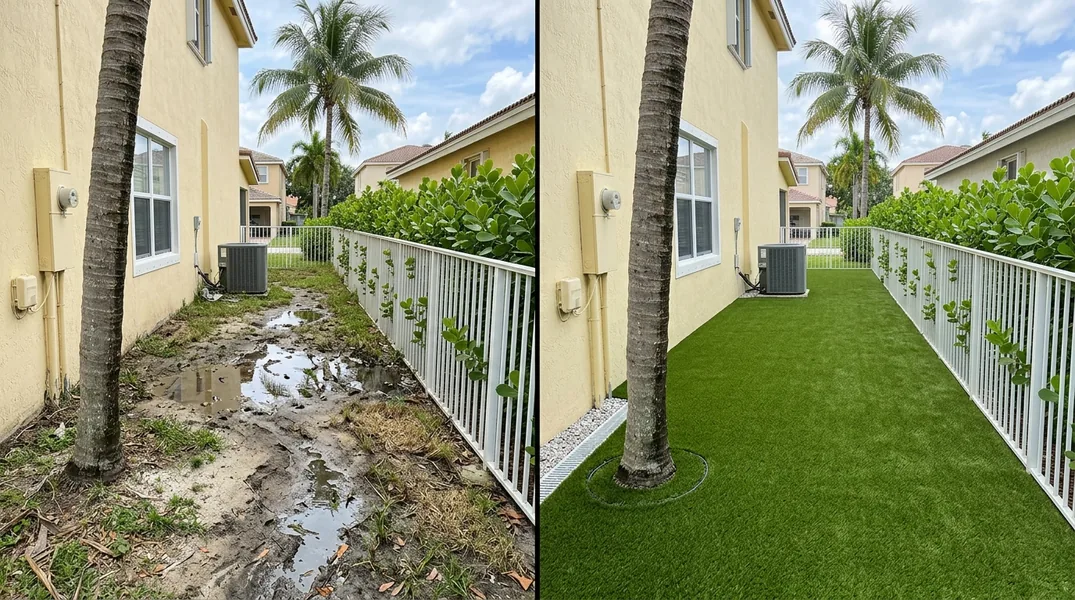
Why Miami's Artificial Grass Faces Unique Challenges
Living in Miami means enjoying year-round sunshine, beautiful beaches, and tropical weather. It also means your artificial grass faces environmental stressors that homeowners in other parts of the country rarely encounter. From intense UV exposure and salt air to unexpected wildlife visitors and extreme weather events, Residential Artificial Grass Installation in this region requires understanding local conditions that can lead to premature wear and damage.
The good news is that modern artificial turf is engineered to handle Florida's climate better than ever before. However, homeowners who don't anticipate specific damage patterns often find themselves dealing with costly repairs that could have been prevented. Understanding these threats is the first step toward protecting your investment and keeping your lawn looking pristine for years to come.
Melted Artificial Grass: The Window Reflection Problem
One of the most surprising issues we encounter at Miami Turf Installation is melted artificial grass caused by window and glass reflections. This happens when sunlight bounces off a home's windows, sliding glass doors, or nearby glass surfaces and concentrates intense heat directly onto your turf. The focused rays can reach temperatures exceeding 180 degrees Fahrenheit in concentrated spots, which is hot enough to melt the synthetic fibers of premium artificial grass. Unlike natural grass that can recover from heat stress, melted turf creates permanent damage that requires replacement.
This problem is particularly common in Miami Beach and Coral Gables, where homes feature extensive glass architecture. The damage typically appears as discolored patches, flattened fibers, or visible melting on the turf surface. Prevention is far more cost-effective than repair, so if your home has large south-facing or west-facing windows, consider installing shade solutions like exterior screens, retractable awnings, or strategically placed landscaping. If you already notice melted spots, contact Miami Turf Installation at (786) 744-5371 to assess whether spot repair or full section replacement is necessary.
Hurricane Damage and Storm Recovery for Artificial Turf
Miami's hurricane season runs from June through November, and major storms can cause significant damage to artificial grass installations. High winds can tear seams, dislodge infill material, and even uproot the entire turf system if it wasn't installed with proper anchoring. Flooding and storm surge introduce saltwater that corrodes the backing and base materials, while flying debris can puncture or gouge the surface. Many homeowners don't realize that their Pet Turf & Dog Run Installation or regular lawn needs post-storm inspection to identify hidden damage that might worsen over time.
After a hurricane, the first step is a thorough assessment of your entire turf system. Look for lifted seams, missing infill, drainage issues, and surface damage. Some damage requires professional turf repair, while other issues can be addressed with simple maintenance. If your turf experienced significant impact, don't delay getting a free estimate from a qualified installer. Quick action prevents secondary damage like mold growth under the turf or further deterioration of the base materials. Miami Turf Installation has extensive experience restoring storm-damaged lawns and can get your yard back in shape quickly.
Iguana Damage and Wildlife-Related Turf Repair Near Me
If you've lived in Miami for more than a few years, you've probably encountered an iguana. These large reptiles have become increasingly common throughout the region, and they can cause surprising damage to artificial grass. Iguanas dig burrows and tunnels beneath turf, creating unsightly holes and destabilizing the base layer. They also scratch and claw at the surface while foraging, leaving gouges and damaged fibers. Unlike natural grass, which can recover from some animal damage, artificial turf damage from iguanas typically requires professional repair or replacement of affected sections.
Preventing iguana damage is challenging since these creatures are protected under Florida law and cannot be easily removed. However, you can discourage them by removing food sources like fruit trees, securing trash cans, and installing barriers around your turf perimeter. If damage has already occurred, assess the extent of the problem before deciding on repairs. Small scratches and minor surface damage might not require professional intervention, but tunneling and large gouges need attention from someone experienced in artificial turf repair near me services. Contact Miami Turf Installation to evaluate whether your damaged sections can be patched or if full replacement is more cost-effective.
Salt Air Corrosion and Coastal Maintenance
Homes near Miami's coast face an additional challenge: salt air corrosion. The combination of ocean spray and high humidity accelerates the breakdown of the turf backing, base materials, and drainage systems. Homeowners in beachfront properties or those within a few miles of the coast often notice premature deterioration compared to inland installations. The salt deposits accumulate over time, affecting both the aesthetic appearance and the structural integrity of your artificial grass system. Regular rinsing with fresh water helps mitigate this damage, but it's not a complete solution.
Proper installation with high-quality materials designed for coastal environments is essential for Miami properties. When you're considering Putting Green Installation or any other turf project in a coastal area, make sure your installer uses marine-grade backing and premium drainage systems built to resist salt corrosion. Additionally, schedule periodic professional maintenance to rinse the turf, check for corrosion in the base layers, and address any drainage issues before they become major problems. This proactive approach extends the lifespan of your investment significantly.
Artificial Turf Repair Cost in Miami: What to Budget
The cost of artificial turf repair varies significantly depending on the type and extent of damage. Minor surface damage like small melted spots or light scratches might cost between $200 and $500 to repair, while larger damaged sections requiring partial replacement can run $800 to $2,000 or more. Complete turf replacement for an average residential yard typically costs more, which is why prevention and early intervention are so important. Understanding pricing for different repair scenarios helps you make informed decisions about whether to patch or replace damaged areas.
Several factors influence repair costs: the size of the damaged area, the age and quality of your existing turf, accessibility for equipment, and whether the underlying base needs replacement. Storm damage and window reflection damage may be covered partially by homeowners insurance, though you'll need to verify your specific policy. Rather than guessing about repair needs and costs, get a professional assessment. Miami Turf Installation provides transparent estimates that break down labor, materials, and any necessary base work. Call (786) 744-5371 or request a free estimate today to understand exactly what your repairs will cost and what to expect for timeline and durability.
Looking for a professional artificial grass installation company in Miami? Miami Turf Installation responds fast for all your artificial grass installation needs.
Get a Free Quote