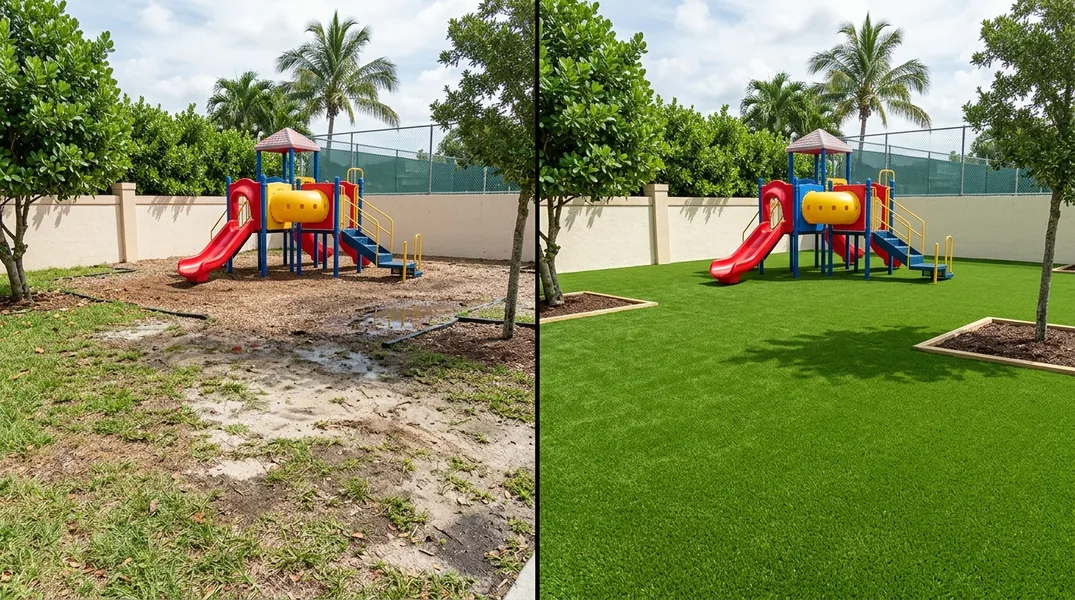
Understanding Your Landscaping Options in Miami
If you own a home in Miami, you've probably thought about your outdoor space more than once. The Florida heat, humidity, and occasional drought make lawn care challenging, and homeowners increasingly face a decision: stick with traditional natural grass, explore alternatives like St. Augustine, or embrace modern solutions like artificial turf and drought-tolerant landscaping.
This guide cuts through the marketing noise and gives you an honest comparison of these three approaches. We'll look at installation, maintenance, cost, and environmental impact so you can make the choice that actually works for your lifestyle and budget. Whether you're interested in Residential Artificial Grass Installation or simply want to understand your options, this article will help you decide.
Artificial Grass vs Real Grass: The Core Differences
When comparing artificial grass vs real grass, the differences extend far beyond appearance. Natural grass, particularly St. Augustine (the most common warm-season grass in Florida), requires consistent watering, regular mowing, fertilization, and pest management. In Miami's subtropical climate, this means year-round maintenance and significant water consumption, especially during dry periods.
Artificial turf, by contrast, requires no watering, mowing, or chemical treatments. Modern synthetic grass looks remarkably realistic and feels natural underfoot. The initial investment is higher than seeding natural grass, but the long-term savings on water bills, lawn equipment, fertilizers, and labor add up quickly. For homeowners who value their time and want a consistently green lawn regardless of weather, artificial turf eliminates the guesswork and ongoing commitment that natural grass demands.
One honest consideration: artificial grass does have a lifespan (typically 8 to 15 years depending on quality and foot traffic) and will eventually need replacement, whereas natural grass regenerates naturally. However, the cumulative cost and environmental impact of maintaining natural grass in Florida's climate often outweighs the replacement cost of quality synthetic turf.
St. Augustine Grass: Miami's Traditional Choice
St. Augustine grass has dominated Miami lawns for generations because it thrives in warm, humid climates and tolerates salt spray near coastal areas. It's a dense, attractive grass that establishes relatively quickly and requires less fertilizer than some alternatives. For homeowners committed to natural grass, St. Augustine remains a solid choice.
However, St. Augustine comes with real drawbacks in modern Miami. It requires frequent watering during dry seasons, especially in summer and during drought conditions. The grass is susceptible to diseases like brown patch and chinch bugs, which require pesticide treatments. Mowing must happen weekly during the growing season, and the grass can thin in heavily shaded areas. Water usage for maintaining St. Augustine in South Florida is substantial, and with increasing water restrictions in the region, many homeowners find themselves unable to keep their lawns as lush as they'd like.
The environmental cost is worth considering too. Traditional lawn care contributes to water waste, chemical runoff, and carbon emissions from mowing equipment. If environmental impact matters to you, St. Augustine requires careful management to minimize these effects.
Xeriscaping and Florida-Friendly Landscaping: A Sustainable Alternative
Xeriscaping and Florida-friendly landscaping represent a middle ground between traditional lawns and artificial turf. These approaches use native plants, drought-tolerant species, mulch, hardscaping, and strategic design to create attractive outdoor spaces while minimizing water use and maintenance. Florida's Department of Environmental Protection actively promotes Florida-friendly landscaping principles, which emphasize water conservation, reduced chemical inputs, and native plant selection.
A Florida-friendly landscape might include native shrubs like coontie or saw palmetto, ornamental grasses, groundcovers, stone pathways, and decorative mulch instead of a traditional turf lawn. This approach uses significantly less water than St. Augustine grass and requires minimal fertilizers or pesticides. The visual appeal is different from a traditional lawn, but many homeowners find the naturalistic aesthetic attractive and the biodiversity benefits compelling.
The main limitation of xeriscaping is that it doesn't provide the same recreational surface as grass. If you have children, pets, or simply want a space to lounge on bare ground, a drought-tolerant landscape won't fully replace that function. This is where artificial turf offers a practical advantage: it provides the usable lawn surface that xeriscaping cannot, while maintaining the water and maintenance benefits of sustainable landscaping.
Turf vs Artificial Grass: Making the Right Choice for Your Miami Home
The decision between turf vs artificial grass ultimately depends on your priorities. If you value environmental sustainability above all else and are willing to sacrifice a traditional lawn surface, xeriscaping and Florida-friendly landscaping are excellent choices. If you're committed to natural grass despite the maintenance burden, St. Augustine is the proven option for Miami's climate.
But if you want a green, usable lawn with minimal maintenance and water consumption, artificial turf wins on nearly every practical measure. Modern synthetic grass has eliminated the plastic-looking appearance of older products, and premium installations rival natural grass in aesthetics. You get the recreational benefits of a real lawn without the watering, mowing, chemicals, or environmental guilt.
Many Miami homeowners are also combining approaches. For example, some install artificial turf in high-traffic areas and use xeriscaping in other zones. Others use artificial grass for Pet Turf & Dog Run Installation where durability matters most, while maintaining natural plantings elsewhere. This hybrid approach gives you flexibility and allows you to optimize different areas of your yard for different purposes.
Residential Artificial Grass Installation Cost in Miami: What to Budget
When considering artificial grass, cost is a legitimate factor. The pricing for quality artificial turf installation typically ranges from $8 to $16 per square foot installed, depending on yard size, terrain complexity, drainage requirements, and grass quality. A 1,000 square foot yard might cost $8,000 to $16,000, which sounds substantial until you compare it to the cumulative cost of maintaining natural grass over the same period.
Over ten years, a natural lawn requires regular watering (significant in a water-conscious area like Miami), weekly mowing during growing season, fertilizers, pest control treatments, and occasional re-seeding. These costs easily total $5,000 to $10,000 or more, plus the value of your time and effort. Artificial turf, once installed, requires only occasional rinsing and debris removal, eliminating virtually all ongoing expenses. The return on investment typically occurs within 5 to 7 years, after which you're essentially operating a free lawn.
If you're interested in exploring artificial turf for your specific property, Miami Turf Installation offers a free estimate so you can see actual pricing for your yard. Call (786) 744-5371 to discuss your project and get a clear understanding of what quality installation costs in your area.
The Environmental and Practical Case for Modern Artificial Turf
Environmental concerns about artificial grass are understandable but often outdated. Older synthetic turf products used lead-based infill and had questionable durability, but modern artificial grass uses non-toxic materials and lasts considerably longer. More importantly, the environmental impact of eliminating water waste, chemical runoff, and equipment emissions often outweighs the manufacturing footprint of quality synthetic turf.
In a water-stressed region like South Florida, where drought restrictions are increasingly common, artificial turf represents a practical solution to an ongoing problem. You maintain a functional outdoor space without contributing to water scarcity. For homeowners with Pool Surround Turf or other specialized applications, artificial grass also eliminates the muddy, chlorine-damaged grass problems that plague traditional lawns around pools.
The honest truth is that no single solution is perfect for every homeowner. But for most Miami residents who want an attractive, usable lawn without the maintenance burden and environmental cost of natural grass, artificial turf is the most practical choice available today. If you're ready to explore this option for your home, reach out to Miami Turf Installation at (786) 744-5371 to discuss your needs and get started with a professional consultation.
Looking for a professional artificial grass installation company in Miami? Miami Turf Installation responds fast for all your artificial grass installation needs.
Get a Free Quote